Bruce Lawson von Opera im Interview Technikwürze 186
Auf der beyond tellerrand haben wir den Open Web Standards Evangelisten Bruce Lawson von Opera getroffen und ihn Fragen zu Webstandards, Responsive Images, Operas Beteiligung an neuen Spezifikationen und zu seinen grandiosen Hut gestellt.

Transkript der Folge
-
David In dieser 186. Ausgabe von Technikwürze haben wir ein Interview für euch mit Bruce Lawson. Er ist Open Web Standards Evangelist bei Opera.
-
Einspieler Herzlich willkommen zu Technikwürze, eurem Design- und Webstandards-Podcast.
-
David "Wann bringt ihr denn endlich 'ne neue Technikwürze raus?", hieß es die letzten Monate und dem kommen wir nach, natürlich gerne. Herzlich willkommen zur 186. Ausgabe. Mein Name ist David Maciejewski und in dieser Sendung haben wir ein Interview mit Bruce Lawson. Wie eben erwähnt, er ist ja Open Web Standards Evangelist bei Opera. "Wir" heißt in diesem Falle Working JAV Podcast. Mit dem Kollegen hab ich das nämlich zusammen gemacht.
Insbesondere vielen Dank an Christian Schepp, der das Ganze auch initiiert hat und es ist 'n sehr interessantes englischsprachiges Interview. Bei dem wünsch ich euch gleich viel Spaß. Wir haben natürlich im Rahmen der Beyond Tellerrand, die wir besucht haben, das waren die zwei Tage, stand ja, fand ja statt in Düsseldorf im Capitol Theater am 19. und 20. November. Da haben wir das ganze Ding aufgenommen. Eine hervorragende Konferenz. Auch die Nachberichterstattung hatten wir auf te.de, gepostet.
Die Links dazu gibt es noch mal in den Shownotes auf Technikwürze.de. Solltet ihr 2013 nicht verpassen. Im Mai findet es statt. Die genauen Termine findet ihr dann auch genau auf unserer Webseite. So, 'n großen Dank muss ich natürlich auch noch aussprechen unserem Premium Sponsor, das ist Mittwald.
Mittwald, hat uns, sagen wir mal, die ganze Zeit, auch wo wir keine Sendung gemacht haben und es sollen jetzt noch einige folgen, unterstützt, tatkräftig unterstützt, haben den Server bereitgestellt und wundert euch mal nicht, Technikwürze heißt zwar nicht, wenn es nicht läuft, dass da nix los ist. Wir hatten gigabyteweise Traffic, der monatlich da von unseren Servern gelutscht wird und dafür noch mal herzlichen Dank. Ihr habt also auch nicht aufgehört, die alten Folgen zu hören.
Nun also eine neue und, wie gesagt, Mittwald ist unser, Hosting Sponsor und bietet auch euch, wenn ihr 'ne Agentur seid oder 'n Entwickler seid, das, Hosting und die machen auch ganz tolle Schulungen. Da sollt ihr auf jeden Fall auf mittwald.de noch mal vorbeisurfen. So, so viel von mir. Demnächst gibt's was Neues, aber jetzt halt ich erst mal meinen Mund. Jetzt geht's nämlich weiter mit, Bruce Lawson. Viel Spaß.
-
Einspieler Interview.
-
David Front end related and some web standards related and some Opera browser related.
-
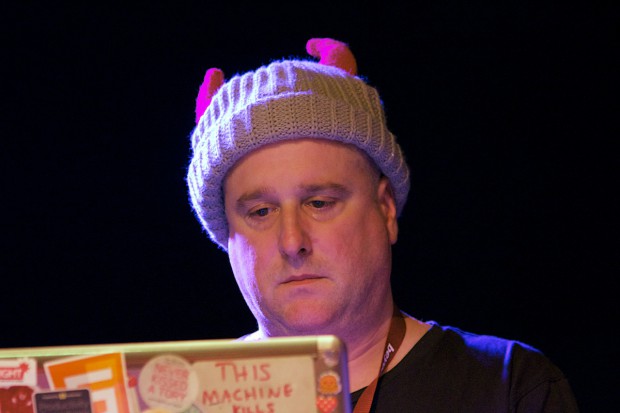
Christian And what about your hat?
-
Bruce About my hat. My, my, my kids bought it for my birthday, which was Tuesday. And they, they seem to think that a forty-six-year-old man needs a devil hat.
-
David Yeah.
-
Christian And you're wearing it the whole day. It looks very cool.
-
Bruce I've just had my head shaved, and it's pretty cold.
-
David Yeah, I understand.
-
Bruce Yeah.
-
Christian So just a, a few words to, to Bruce, who's not familiar with him. He, he works at Opera, right?
-
Bruce Yeah.
-
Christian Uh, for several years now.
-
Bruce Four years now.
-
Christian Four.
-
David What's his job?
-
Bruce I'm a developer relations guy. Um, uh, I change my job title depending on whom I'm talking to, but I, I tend to say I'm a, I'm an open standards evangelist, basically, and my job is to persuade, cajole, beg people to use open standards. Not please use Opera or please try Opera and testing it, but please use open standards. It's better for the web.
-
Christian To force the users to more download Opera or to, to, uh, to force using HTML?
-
Bruce If everybody uses the open web standards, then it's gonna work on Opera and Firefox and Safari and Chrome and IE equally well.
-
Christian That was what, was what came out, uh, through your talk. Um, so you, you al-always said, "This is working in Opera and also in Firefox and also in Chrome," and all that stuff. Um, and I really like this idea of, of introducing, um, web standards and not we want to force you to use a certain browser. Um, like for example, you presented on a Chrome, actually. You did this on purpose?
-
Bruce By accident, but no. No, my Win-- It's the first time I've had a Windows PC, and they didn't have the adapter for it. They assumed everybody was on Mac.
-
Christian Oh, it was a Mac, Bruce.
-
Bruce Yeah, I'd never used a Mac before. And then, then it was Chrome as well. But because I write my slides in HTML5 and CSS, it just worked-
-
Christian Yeah
-
Bruce ...on Chrome, even though I hadn't tested it. It just worked because that's what open standards are supposed to do.
-
Christian Great.
-
David So, um, you also, you're, uh, you're also part of the HTML5 Doctors, uh-
-
Bruce Yeah
-
David ...group. And so one of the questions I wrote down is, uh, um, how is, uh, how does one imagine being a HTML5 Doctor? Is it a lot of work or is it... And, uh, are there-- can people apply get-- for getting, for becoming a HTML5 Doctor and spreading, uh, knowledge? Or how, how is this group set up?
-
Bruce Well, we started it, uh, there was a conference in, uh, in London about three years ago, and I just said, "If anybody wants to meet up afterwards and talk about HTML5, let's go to the pub." And five guys did, and we're all still the Doctors. Excuse me. We set it up, and then Remy Sharp joined very soon afterwards. And our newest Doctor, um, who joined a month ago, is actually resident in Düsseldorf. He's a, a-an Irishman, but he's, uh, over here. His name is Ian Devlin.
And, uh, we met up with him. Remy met him for the first time. I've met him before, just a few minutes ago.
It's, uh, it's, he is a lot of work for the other guys 'cause I'm paid to do this stuff. The other guys do it in their own time after hours. So I wanna, uh, I wanna give a big shout-out to those chaps because they're volunteering on their own time. It's quite a lot of work because we get lots of weird emails, mostly asking us about medical questions, which is odd.
-
David Can you fix my HTML?
-
Bruce Worse than that, if you-
-
David Can you fix my leg?
-
Bruce If you check HTML5nurse.tumblr.com, I sometimes post the weird medical questions that we get sent. Uh, unfortunately because we use good markup, we have terribly good SEO. We didn't care about SEO, but we get great SEO, and if you type in 'ask the doctor' into Google, we're one of the first 10 search results. And so we get, uh, lot of, a lot of questions about sexually related problems that people have. So we had a big red thing over the Contact Us form saying, "We are not medical doctors.
Do not contact us." But people ignore big red letters above contact forms and send us questions about their penises, which is-
... entertaining.
-
David Yes.
-
Bruce But, uh, off message. So we spend a lot of time laughing at people's penises.
-
David So filter the messages.
-
Bruce Yeah. No, no, we don't want to filter them 'cause it's great fun. But, uh, yeah, the other guys put in loads of work. Um, and we-
-
David Do you answer these questions?
-
Bruce We never answer the medical ones except for once. We, we made a rule that we would never answer them except once. And, and, uh, some guy wrote to us and said, "My four-year-old son has been diagnosed with testicular cancer. I'm thinking about homeopathic medicine. What do you think?" Um, as a proud owner of two children myself, I wrote back and said, "Dude, d- don't think about homeopathic medicine. Go to a fu- go to a doctor." Sorry about the rude word there.
That's the only time we've actually answered a weird medical question. The rest of the time it's, it's... I, I reckon most questions are what's the difference between section and article, and that's the perennial one. We've answered it several dozen times, but staggeringly, people don't actually read the website. They just email us.
-
David Yeah. It's easier.
-
Bruce It's easier. Yeah.
-
David For them.
-
Bruce For them.
-
David Yeah.
-
Bruce Yeah.
-
David So back to HTML. Yeah. Um, right. Uh, since we are at it, uh, one of the questions we have is what, uh, do you think, uh... I, I saw you last year at fronties.
-
Bruce Yeah.
-
David You also held a really nice talk.
-
Bruce Thank you.
-
David And, uh, you were explaining the, um, the new semantic-
-
Bruce Mm-hmm
-
David ... parts of HTML5, and that we, uh, that by defining header, footer and aside and so on, we, uh, implicitly also define which is the main area.
-
Bruce Mm-hmm.
-
David But, uh, all of a sudden people don't, uh, seem not to feel at ease anymore-
-
Bruce Mm-hmm
-
David ... with all the main, uh, element and so, um, I think there are, uh, advances in establishing this main element. So what is your opinion about it?
-
Bruce I've just changed my opinion. Previously, I was against the main element on the grounds that introducing an extra element is, is not free. Um, i- it massively increases the amount of tests that browsers have to do, for example, in QA.
But now I'm bec- I'm coming around to the opinion that it's a good idea because I'm coming around to the opinion that not everybody's gonna mark up their nav, header and footer, and therefore, uh, employing a heuristic that assumes those things exist is assuming too much of markup authors, and it's, it's a sad thing to say, but most people don't write good HTML. So I think I'm coming around to the opinion that it's a good idea to have a main content element.
I, I'm not wholly convinced, but I'm, my, my opinion's changing.
-
David But, uh, you're saying not everybody's using nav or header or footer-
-
Bruce Mm
-
David ... or something. Do you think people will use main while they're not using one of the other new, uh, in inverted commas, elements?
-
Bruce I think they do. Uh, there's a friend of mine called Steve Faulkner who's, uh, instrumental in setting this, i- in setting this train in motion, and Steve did r- um, he grabbed 10,000, the, the Alexa top 10,000 and just grabbed the HTML and ran some number crunching on it, and most people use something like div ID=main or div ID=main content, and they generally use it where you would expect it, um, to be used. Pe- pe- people know where their main content is.
Even if they're am- they don't know where their nav is, even if they don't know where head and footer is, they know where their main content is. So it seems to me that you can rely upon markup authors to identify the main content, if not the peripheral stuff.
-
David For me personally, I think it is hard for people or for developers-
-
Bruce Mm
-
David ... to adopt the new elements.
-
Bruce Yeah.
-
David For example, they don't know what is behind them.
-
Bruce Yeah.
-
David So they just do a div and maybe apply role main and that is-
-
Bruce Yeah
-
David ... what HTML5 boilerplate, for example-
-
Bruce Yeah
-
David ... tries to advocate, um, on, and, and I think, um, it is, I think it is hard to, to force people, to get people to, to, to adapt new, uh, elements. So, uh, personally, I'm not sure about this, uh, if, if people will take this up.
-
Bruce I think if, if some people take it up, that's a win. If other people don't take it up, then nothing's lost. No- nothing gets worse, and it will be better if w- for those who do use it. So you can't lose. The browser manufacturers lose 'cause we have to run more tests, but I, I'm firmly of the opinion that the browsers should do the work instead of developers.
You know, i- if the five major browsers do work so a million developers don't have to do the work, that is better for developers and better for the web.
-
David Picking up on the browsers should do the work.
-
Bruce Mm-hmm. Yep.
-
David We're supposed to be getting this new picture element, which-
-
Bruce Mm-hmm
-
David At some point initialized by yourself.
-
Bruce Yeah.
-
David What do you think about an actual responsive image format, a, a file format that will be responsive in itself?
-
Bruce I think it's a great idea, but the thing is it's completely not backwards compatible.
-
David True. But is there no way around it? Like, using the new picture element, you could always fall back.
-
Bruce The, the, the, the reason that the picture element was... It was a straw man that I invented. I didn't actually imagine that it would be, uh, implemented in the manner I suggested. But the good thing with it is that inside it you have a fallback image element. So the way HTML5 works, as you know, is that the new elements tend to wrap other stuff. And so the browsers that don't understand the new elements will nevertheless show the stuff that's inside them.
And so with picture elements, if you don't understand them, you'll at least get the image inside it, which will be a JPEG or a PNG or a GIF. If there's a new responsive image format, then the current crop of browsers will have no idea what to do with that at all, and therefore nothing will be shown. And backwards compatibility is a vital part of moving the web forwards. And that's why HTML5 is...
It has won, and XHTML 2 didn't, is because it always considers backwards compatibility for older content.
-
David And, uh, if, if you, uh, if, if you could decide personally how you would, uh, like this responsive image thing to turn out.
-
Bruce Mm-hmm.
-
David If you had all the power-
-
Bruce Mm-hmm
-
David ... to influence it, uh, would you, uh, would you say you are 100% happy with the solution, uh, that was found today or as of today? Or, um, would you say it would be even better to, to have some sort of, uh, responsive file format which, uh, which, um, maybe helps in slimming down markup and-
-
Bruce That's a great question. Uh, the answer is I don't have an opinion. I was glad that... Well, when I first raised the issue of, uh, adaptive images with the HTML5 working group, I was told that there's no problem. It's not a problem, there's no need to solve it. So I'm glad that the problem is being addressed and I, I don't really care-... what the end result is, as long as it solves that problem.
The picture element is something I dreamed up simply because it looked like the video element in order to start the discussion. The discussion's going on and far cleverer people than I are now on the case.
-
David Yep. As, for example, Scott Jehl.
-
Bruce Scott Jehl. Yeah. Yeah.
-
David Yeah. But also Ansell is also in-
-
Bruce Yeah
-
David ... part of this working group.
-
Bruce Yeah. I th- I think picture's nice, but I'm pr- perfectly prepared for a better solution to come along. I'm not married to that. It was just getting the conversation started, I think is the, is the, the contribution I made. And I want cleverer people than I, like Ansell, to actually do the work.
-
David Yeah.
Well, uh, there's really a better solution than just picture element. I mean, uh, the picture element solves one problem, but, uh, you can solve the problem with a responsive file format too. So just for retina images or high resolution to low resolution, the perfect format would, would be an image format, but for crops or monochrome display, then would be picture element. So combining the two, uh, results would be the best. But, yeah,
-
Bruce Yeah. None of them solve all the problems.
-
David Yeah.
-
Bruce It needs an amalgamation of them, and I'm not clever enough to work out how that amal- amalgamation should look.
-
David Is there a, a clear statement of Opera when we are talking about this, um, whole, uh, new image format about, uh, WebP and what they... If they might implement it, um, in their browser, in your browser?
-
Bruce If, if, if there's a consensus and a, and a thorough specification, Opera will implement it.
-
David So if it becomes open standard, it will, uh, be a part?
-
Bruce Yeah. I mean, I-
-
David As usual
-
Bruce ... I know, I know many of the guys in Opera are, don't think the picture element solves the problem.
-
David Mm.
-
Bruce Um, and those guys are, are cleverer than I am. So what- whatever results from the conversation that I began, once it becomes in the spec and agreed as a standard, Opera will implement it because, like every other browser will, because we implement the standards.
-
David Yeah.
-
Bruce But it, it needs, it needs that standardization, which needs the rigor of lots of people discussing it and considering it.
-
David But also you, you try to, um, as you pointed out in your talk, uh, you, you're trying to invent new stuff like nested media queries. We talked about this in the podcast earlier.
-
Bruce Yeah.
-
David And also the @supports rule for example.
-
Bruce Yeah.
-
David We talked about this too. Um, so, so you're getting into, uh, invention stuff.
-
Bruce Yeah.
-
David Um, and I see personally, uh, that, that, for example, Google is implementing the WebP stuff.
-
Bruce Mm-hmm.
-
David Uh, as it should be.
-
Bruce Yeah.
-
David I think they are the inventors and stuff. Um, and I also think it could be great move to, to partner up with pow- browsers and have this implement, like you're doing with-
-
Bruce Mm-hmm
-
David ... with, uh, Mozilla and all that stuff. So, um, personally, I would love to see, um, for example, another browser like Opera implement, um, a sec- uh, the, the WebP.
-
Bruce Oh, we do.
-
David You do?
-
Bruce We implement WebP.
-
David Oh.
-
Bruce Yeah.
-
David That's what I meant earlier. So-
-
Bruce Oh, sorry. Yeah.
-
David Yeah. Yeah.
-
Bruce No, no. Opera im- implements WebP. Yeah.
-
David Okay. That's awesome.
-
Bruce You, you mean the picture formats based upon the VPA?
-
David Yeah. Yeah.
-
Bruce Yeah. Yeah. It's been in there for two or three releases.
-
David Oh, I haven't noticed that.
Good to know. Thanks. Speaking of new stuff which is in, in the Opera browser- Mm-hmm... in the new one, the 12.10- Yeah... you, you, uh, offered a l- a bunch of new APIs for extension developers. Yeah. And there's one, uh, API which is quite, uh, interesting, which is the screenshot API. Mm-hmm. So, uh, are there any plans to open it up for the regular web development?
Like maybe secured with a prompt and maybe ob- obfuscated input fields for not being spied on, but for like when you have a support center and customer calls you and says, "Everything is broken." You can just have a screenshot sent over. I, I don't know of any plans, and when, when you showed me the questions earlier, all, I, I, I, I said questions I d- I would say I don't know. Yeah. I, I reject it. Which is no problem.
But, uh, the reason I didn't reject this question, 'cause it's a great question and I hadn't thought of it, and I'll take it back to the guys- Okay... at HQ in Oslo when I go in two weeks time and suggest it 'cause it's a really good idea. Yeah. Would love it. Yeah. Okay, cool. So what's the philosophy of, of, um, behind delivering a desktop browser for Opera? Mm-hmm. So your market share is, uh, very low, but, uh, is it only a vehicle to test, um, modern HTML web standards to move forward?
Uh, what's your plan behind Opera? There's several different questions there. The first is, uh, market share is very low. Well, where? In Germany? Yeah. It's low in Germany. Yeah. It's 29% in Russia. Oh. It's 30-something percent in Poland and similarly big in different places. Regarding the desktop browser? Yeah. Or, or market share in general. Yeah. It's big. Um, the philosophy behind it is making a good browser- Okay... that's got what our constituency, our users require.
And, uh, different people use different browsers for different reasons. You know, there's some people who like the Chrome interface. There's other people who like the fact you can have 200 tabs, 300 tabs in Opera. There's other people who like Firefox. And there, there will always be people who like the different stuff. And the people who use Opera Desktop use it because they like it. And if you have... I think we have 55 million users on Opera Desktop.
That's not a trivial amount of people, and they choose to use it because they like it, and therefore we provide it because those people demand it. They, it, it- So it's a misconception to think that, uh, Opera is strong in mobile only and not so much in desktop? Uh, that, that originated our question. We, we're stronger in mobile than desktop. Yeah. And we want to raise market share in desktop, and we, we want to raise market share in mobile too.
Uh, we don't wanna monopolize the market 'cause any market that's monopolized by one individual browser inevitably falls into the stagnation that we saw with IE6. Obviously, we wanna raise market share, but it, it, it is incorrect to say that nobody uses, uh- Yep... such and such because 55 million people do, and that's active users. Yep. That's monthly active users, which is the population of the UK. Yep. Um, okay. So, um, next question is, um, um, what, what about the Opera release cycles?
Mm-hmm. Um, they don't seem to fit a certain scheme. Mm-hmm. So, uh, what is the, the system be- behind the releases of Opera? B- b- by certain scheme, do you mean, like, version numbers or time, timings, et cetera? Uh, it's, it doesn't seem to be the, the, this agile rapid release thing that, uh, Mozilla and- Mm-hmm... uh, Google adopted. So is it rather when you finish certain milestones that- Yeah... then you decide to release it? Yeah.
We changed about 12 months ago from attempting to have a, a release every quarter, and it got quite stressful for people in developer relations when somebody would say, you know, "Write a blog post, we're releasing tomorrow." And we'd say, "What's in it?" And they'd say, "We're not quite sure yet. W- whatever's finished." And now we've released... We, we know what we want to make, and we release it when it's finished. What we have is there's a core, we call it core.
Uh, the rendering engine's called Presto. And when core releases, then our various products like Desktop, Opera Mini, Opera Mobile, Opera TV... Excuse me, Opera SDK, then they pick it up and they do platform integration. So the core is just the rendering engine. And then for Desktop, that has to be hooked up with the UI and the mail client, et cetera. For Mini and Mobile, for Mini it has to be hooked up with the proxy servers, and Mobile it has to be hooked up with, uh, Android and with Symbian.
So once core delivers, then the product integration guys do the integrating with their platforms. And they release when they're ready, which is why you'll see... Sometimes you'll see Opera Mobile having features before Op- Opera Desktop, which has been the last couple of releases. Previous to that, Opera Desktop got stuff before Opera Mobile, simply because they'd integrated earlier and then it got released.
But the philosophy is release when it's ready rather than release to a certain arbitrarily defi- ar- arbitrarily determined calendar date. Okay. Because that way you get bugs, and you- Do you want to sync these new features, new HTML5 features for the different, uh, Opera browsers, so Desktop and Mobile? So you have, uh, one version that fits all? They all get the same thing. It's just they get released when they are ready. Uh, there's no point in Desktop having-
-
Bruce Unprefix Flexbox and sitting on it for two months waiting for Opera Mobile to integrate it. Each one releases when it's ready based upon when Core actually says we have unprefix Flexbox ready. Then the guys go and integrate it with the individual products.
-
David So your message for the mobile team is, uh, we have released the desktop version. Please, uh, fix it on your own in your mobile version.
-
Bruce Core gives them a product, and then those guys integrate it and release. So Core says, "It's ready. We've, we've tested it. We've stress tested it. We've run it through our, you know, forty, fifty thousand different unit tests. Unprefix Flexbox works. Now you guys integrate it with the platforms and get it out." Desktop, we have to test on Windows, Mac, and Linux, which are not that dissimilar. With mobile, you have to test on, uh, Symbian and Android, which are very dissimilar.
With Mini, you have to test with... I think we run on three thousand different devices now for a Mini, so there's a lot more testing to do.
-
David Yeah.
-
Bruce So, so that, that, that's how it works.
-
David Okay. So, uh, one, one final question.
-
Bruce Go for it, sir.
-
David This, uh, regards on the, the web, uh, documentation platforms-
-
Bruce Mm-hmm
-
David ... which, uh, was the Web Standards Curriculum-
-
Bruce Yeah
-
David ... uh, which Opera ignited-
-
Bruce Mm-hmm
-
David ... and, uh, handed over to W3C. And, uh, the, the first... And then there's a new webplatform.org-
-
Bruce Yeah
-
David ... thing. And the question is: What, what is the roadmap for, uh, the Web Standards Curriculum? Will it stay there in parallel, or will it be transferred and then closed down? And, uh, also the question, what, uh, what did, did happen in the time when the W3C, uh, was the owner of the curriculum? Because before that, I, I heard... I read more about it and then it got a little bit calm.
-
Bruce Yeah. We- webplatform.org now owns the Web Standards Curriculum. Um, webplatform.org's new.
-
David Mm-hmm.
-
Bruce And there's a document sprint coming up quite soon. Opera's given the Web Standards Curriculum to webplatform.org, and the guy behind the Web Standards Curriculum, I don't know if you know him, I don't know if he's been out here. I got, got a friend of mine called Chris Mills, who's an Opera employee, and Opera has given him fifty percent to the W3C to do webplatform.org. So we pay his salary, but fifty percent of the time, he's now a fellow of the W3C concentrating on webplatform.org.
Uh, an integral part to that is the Web Standards Curriculum. I don't know... I, I... Embarrassing, I don't know what it's called now.
-
David Right.
-
Bruce Uh, but it's on webplatform.org. He's just updated it, so now it's all HTML5 rather than HTML4, as it was three years ago when we wrote it. It's being published on webplatform.org, and we're... One of the reasons that Chris is being funded fifty percent is to continue to develop the Web Standards Curriculum and to continue developing webplatform.org.
-
David Okay. So you're taking the safer edge, just, uh, pushing forward both. So if one of... if, if Web Standards, uh, if Web Plat- webplatform.org fails for whatever reason, maybe because of the browser vendors-
-
Bruce Mm-hmm
-
David ... just, uh, not, uh, getting along together, so you, you still have the, the Web Standards Curriculum.
-
Bruce No, no, it's gone to webplatform.org. Yeah. And the browser vendors not getting on together, that's an inconceivable situation.
-
David Yeah.
-
Bruce It's never happened before. We all love each other terribly.
-
David Okay. One final question.
-
Bruce Yes, sir.
-
David Uh, one final question, sir. Uh, interests, interests me personally-
-
Bruce Mm-hmm
-
David ... is, um, about we're all, uh, developers-
-
Bruce Mm-hmm
-
David ... and so we have to deal with, uh, tools like, for example, Dragonfly-
-
Bruce Mm-hmm
-
David ... uh, Chrome DevTools, and all this stuff.
-
Bruce Yeah.
-
David Um, what movement is, uh, is at the moment at, at, um, uh, at Dragonfly? Because I'm not into it. I don't get the news, what it is, uh-
-
Bruce Mm-hmm
-
David ... what is in, uh, Dragonfly, but I get the news what is, what is in, um, in, in Chrome DevTools. So what is going on there and, and how, how do you improve that at Opera?
-
Bruce We've just had, uh, a big push. Uh, the, the, the Network Inspector has been, um, considerably revamped. The CSS profiler now, which allows you to see, you know, what CSS is downloaded when, et cetera. Um, I think you're gonna see a bit of quiet time while we work on some new stuff that will be coming out, uh, a little later this year or early next year. Um, one of the things that we wanna do is make it the best tool for developers to use.
Uh, and Dragonfly's open source, of course, um, so anybody can grab it and use it, uh, when... No, that would be indiscreet of me to say that, so I won't say it. But, but we, we, we've offered, offered the protocol and the, the source to various other browser manufacturers. Um-... it can be used.
-
David Let me pick this up.
-
Bruce Mm-hmm.
-
David Uh, one wish for me personally would be, uh, source maps-
-
Bruce Mm-hmm
-
David ... um, also to integrate in JavaScript and, uh-
-
Bruce Oh, like so we can see whether your CoffeeScript and-
-
David SASS
-
Bruce Yeah, yeah. Okay.
-
David Yeah. Uh, that would be awesome. Um, this is a wish. And, uh, my last question, my very last question about that is, um, that I've forgotten, actually. So, um, I'm passing on to Rodney.
-
Bruce Well, I, I shall pass on your wish to the guy called Christian Krebs, who's a German chap, who is our Drap Main Dragonfly developer, and I'll tell him that you'd like that.
-
David Awesome. Thanks man.
So, Bruce, before-
-
Bruce Yes, sir
-
David ... releasing you to your very well deserved dinner-
-
Bruce Yeah
-
David ... which we have been keeping you from.
-
Bruce Not a worry, sir. I'm, I'm-
-
David We are terribly sorry.
-
Bruce I'm not wasting away-
-
David We're, uh
-
Bruce ... as you can probably tell.
-
David Okay. Uh, last year-
-
Bruce Yep
-
David ... at the Beyond Tellerrand, we had a very nice discussion-... with a lady from Britain-
-
Bruce Yes
-
David ... about the-
Naomi.
Naomi. Right.
-
Bruce Naomi I can see.
-
David Yeah. Yeah.
Right. About the, uh, appearance of the German web development scene-... to the outside of Germany. So the question is, how do you perceive it today? Is there stuff going on? Do you realize there is-- there are people actually doing some vital stuff, some interesting stuff in, in Germany?
-
Bruce The fact-
-
David We are seeing it a little critical, so...
-
Bruce The fact that I'm here today at Beyond Tellerrand, and there's a lot of international speakers here, I think is indicative that there's a thriving scene here. Um, I regularly speak to German people, some-- many of whom are in the audience today, like Eric Eggers, uh, Yatil, I think on-
-
David Yeah
-
Bruce ... on Twitter, who's been making some nice polyfills with Aria, et cetera. Mark, of course, who runs Beyond Tellerrand. It, it, it's a great thriving community. Um, I, I, I'm actually really surprised that everybody here is speaking English. I assumed there'd be a lot of German language talks, but, uh, it's great. You know, it's, it's like the Dutch community and, uh, the French community is growing as well. It's great to see a German community. I've been visiting the Polish community.
What I really like is the fact that it's a, it's an international community, but each nation has its own distinct feel, which I've really enjoyed here 'cause it's my first time in Germany for over a decade, and certainly my first time at Düsseldorf. So, you know. Thank you, everybody. Thanks for having me and thanks for interviewing me. It's been really cool.
-
David Yeah. Thanks for joining us.
Thank you.
-
Bruce Thank you, sir. Danke schön.
-
David Guten Abend.
Great. So this was, uh, our next episode of Working Draft and also Tech-- Technikwürze?
-
Bruce Yes.
-
David Technikwürze.
-
Bruce Yes.
-
David After a long time of, uh-
Of a pause, yeah. We're back in English actually.
-
Bruce Yes.
-
David Are you still some days in Düsseldorf or not?
-
Bruce I'm going tomorrow. Yeah.
-
David So, uh, we would like to send-- uh, thank, uh, Bruce Lawson again for joining us.
-
Bruce No, thank you very much for having me.
-
David Thanks for your talk. Um, thanks for everybody who participated in our small discussion group, uh, group.
Hear you next week in regular.
Yeah. As a regular next-
Podcast or in the next episode of Technikwürze.
-
Bruce Yes.
-
David See ya.
Bye.
Thanks. Bye.
-
Bruce Thanks, gentlemen.
-
David Thank you.
Thank you.
-
Bruce I hope, I hope I was reasonably frank.
-
David No, it was, it was-
-
Bruce I hope I was reasonably honest and, uh-
-
David It was, it was awesome.
-
Bruce Splendid.
-
Einspieler Mehr Qualität im Webdesign durch Webstandards. Tipps und Tricks zur Umsetzung findet ihr bei den Webkrauts auf Webkrauts.de. Für ein besseres Web. Weitere Informationen und die Links zur Sendung auf technikwürze.de.
-
David Mensch, und diese Intros und Outros können wir auch noch mal ersetzen. Machen wir.
Diese Folge ist eine Koproduktion mit dem Working Draft Podcast Wir haben sie am 20. November 2012 in Düsseldorf auf der beyond tellerrand aufgenommen. Vielen Dank an Marc Thiele für diese grandiose Veranstaltung. Die Links zur Konferenz findet ihr hier:
Bruce Lawson
Beyond Tellerrand
Erwähnungen 26


Kommentare 3
-

Den Podcast werde ich mir gleich anhören und danach evtl. kommentieren.
Die Seite selbst hättet ihr aber für euren Gast durchaus validieren (und auf Opera testen) können. ;) Gerade, weil ihr euch Web Standards auf die Fahne schreibt.
-

Die Seite ist leider alt, sehr alt. Wenn die Zeit reicht, bauen wir eine Neue.
-

Wahrscheinlich hält der Gast persönlich nicht so viel von Validation und Web Standards. Ich habe gerade sein Blog http://www.brucelawson.co.uk/ durch http://validator.w3.org/unicorn/ geprüft.